Agentic AI
Agentic AI 101: What It Is, How It Works, and Why It Matters for Creators
Feb 10, 2026
7 min read
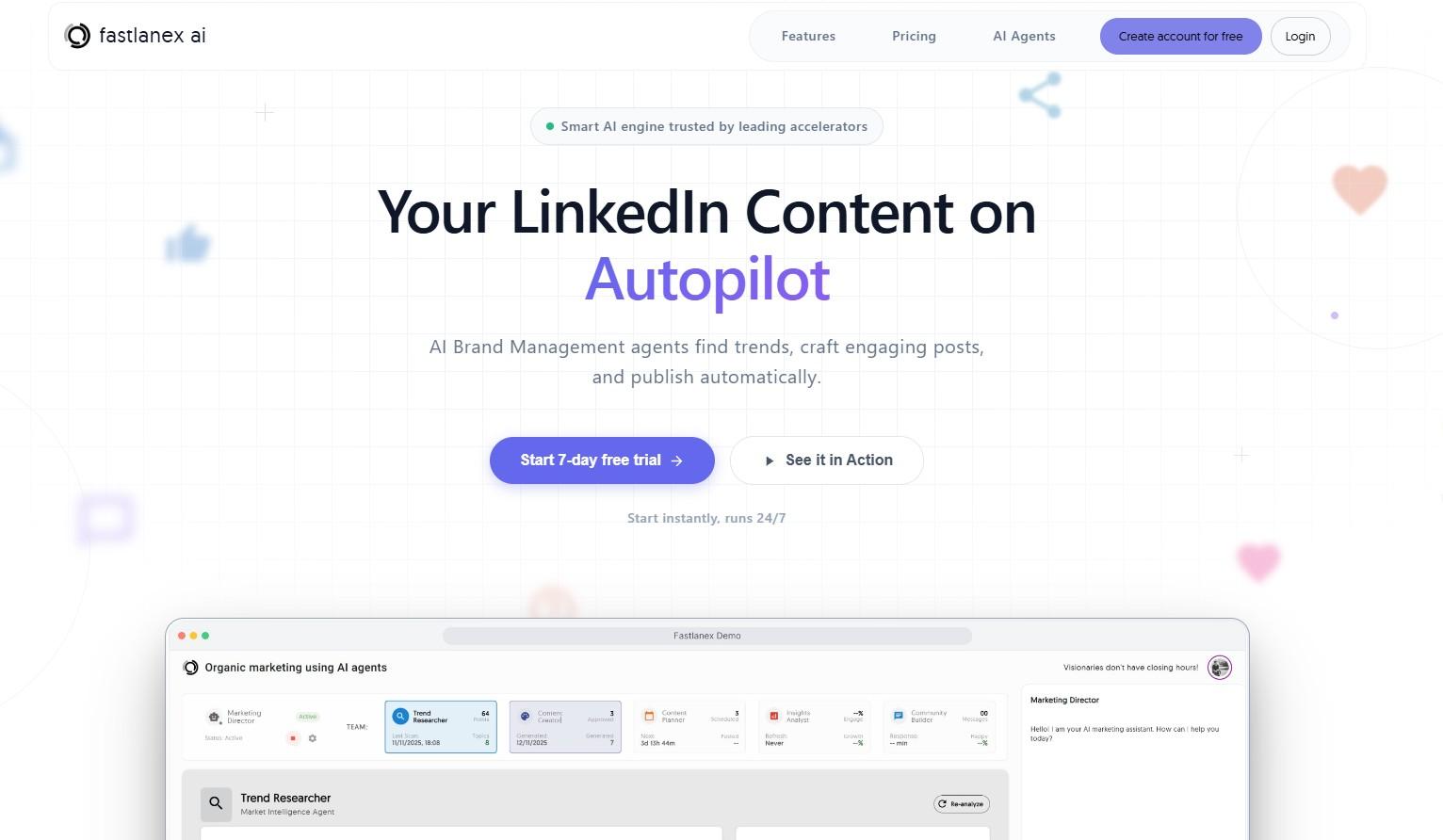
Agentic AI is the shift from “AI that answers” to “AI that does.” Instead of prompting for one-off outputs, you design a workflow and let agents execute it reliably. That's exactly why fastlanex.ai uses an agent workspace model for content creation and LinkedIn scheduling.
Agentic AI, explained simply
- A “chat” model responds to prompts. An “agent” executes a workflow.
- Agents can plan steps, call tools, store state, and resume later.
- Agentic AI is best for repeatable processes: research → draft → publish.
The 5 components of an AI agent
- Goal: what the agent is trying to achieve (e.g., weekly LinkedIn posts)
- Context: brand voice, audience, product, past performance
- Tools: web browsing, data sources, scheduling, image generation
- Memory: what worked before, what to avoid, what to repeat
- Human feedback: approvals and edits to keep quality high
A real agentic workflow for LinkedIn content
Here's an easy mental model: your agents run a pipeline every week. fastlanex.ai organizes this as an agent workspace.
- Trend researcher scans topics and competitor angles
- Content creator drafts posts aligned to your pillars
- Image generator creates matching visuals
- Planner schedules posts across the week
- Analytics feedback informs next week's content
Learn more
Final takeaway
Agentic AI is about workflows. If you can describe the steps, you can automate them. fastlanex.ai makes that practical for LinkedIn: agents generate, you approve, and the planner schedules - consistently.