How to Use AI Agents for LinkedIn (Without Sounding Like a Bot)
Feb 10, 2026
12 min read
AI agents can help you publish consistently on LinkedIn - but the secret is using them like a team, not like a spam machine. This guide shows what to automate, what to keep human, and how fastlanex.ai helps you build an agent-driven workflow that still sounds like you.
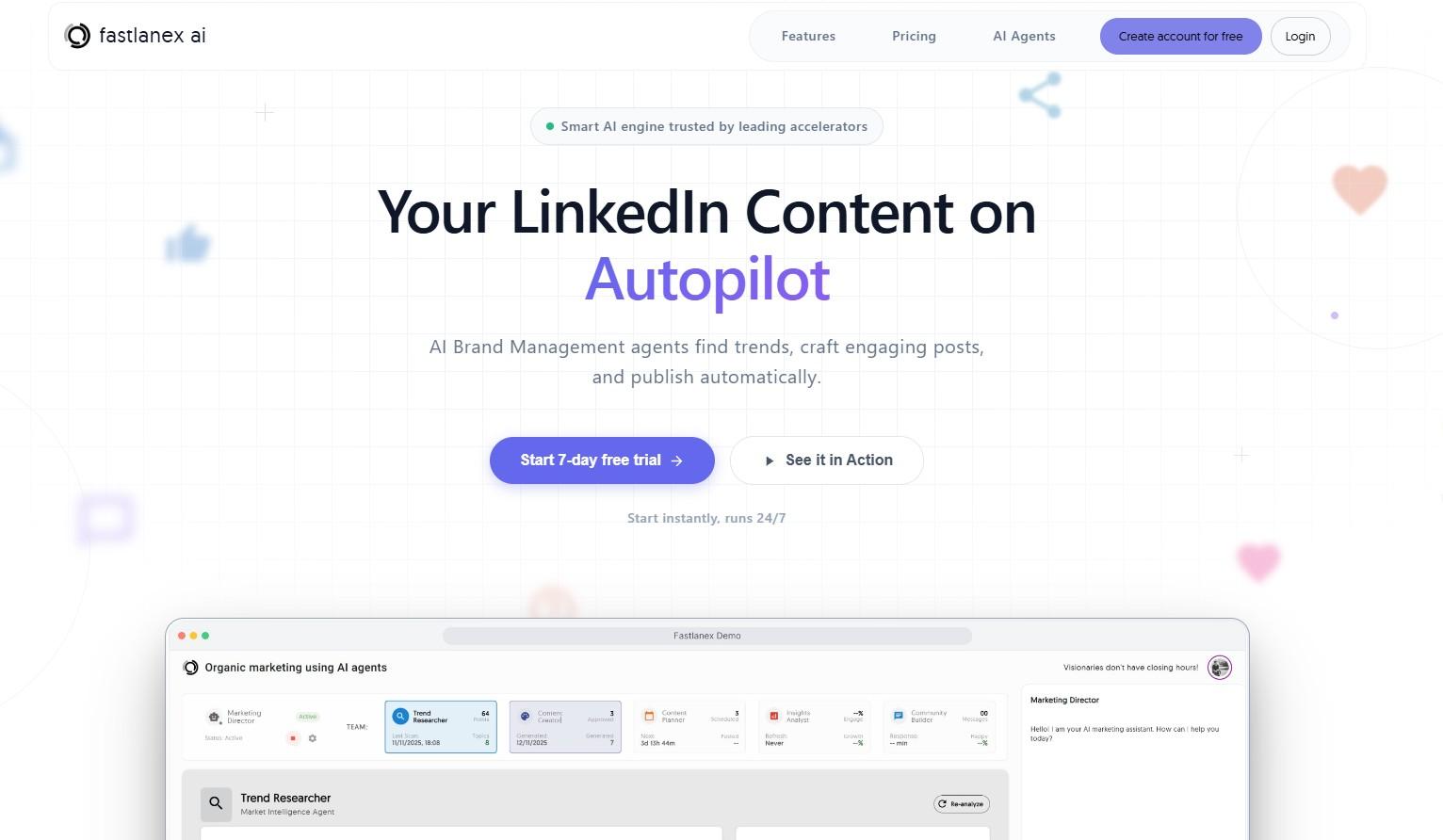
What AI agents should do for you
- Ideation: generate topics aligned to your niche and audience
- Drafting: produce 3–10 post drafts per week (in your style)
- Design: generate visuals / image prompts for post graphics
- Scheduling: set cadence, time windows, and queue posts
- Iteration: analyze what performs and improve next week
The LinkedIn post types agents are best at
Agents perform best when the task is structured. On LinkedIn, that means repeatable post formats. Your job is to supply the raw material (opinions, examples, constraints). The agent turns it into a clean draft.
- Point of view post: a clear opinion and why you believe it
- Framework post: a step-by-step method your audience can copy
- Story post: a mistake, lesson, or behind-the-scenes moment
- Tactical post: a checklist, template, or short playbook
- Resource post: a curated list with your commentary
A realistic weekly cadence (3 posts)
If you are busy, start with a simple 3-post cadence. It creates enough touchpoints to learn what works, without forcing low-quality daily posting.
- Day 1: point of view post (positioning and belief)
- Day 3: framework post (teach a repeatable method)
- Day 5: story post (proof, credibility, and human voice)
Prompt templates you can reuse
Most bad AI content comes from vague prompts. Use prompts that include: the audience, the belief, the proof, and the intended action.
- Write a LinkedIn post for [audience] who struggle with [problem]. My point of view is [belief]. Include one example and a clear takeaway.
- Turn this bullet list into a short LinkedIn framework. Use plain language, add one caution, and end with a question that invites comments.
- Rewrite this draft in my tone: direct, helpful, and specific. Avoid generic advice. Keep it under 1800 characters.
- Create 3 hooks for this post. Hooks should be short and polarizing but not offensive. Audience: [role].
- Repurpose this post into 2 follow-up posts: one tactical checklist and one story post.
Common mistakes to avoid
- Letting the agent write the opinion (you should own the point of view)
- Publishing too much too fast (cadence spikes look spammy)
- Copying viral styles that do not match your brand voice
- Not collecting feedback signals (comments, saves, DMs, profile views)
- Optimizing for output instead of relationships
FAQ
Will AI agents get my LinkedIn account restricted?
Scheduling and drafting are generally safe if you follow platform policies and avoid automation that looks like spam (auto-comments, mass DMs, scraping). Keep a human review step and publish at a steady cadence.
How many posts should I schedule per week?
Start with 3 per week. If quality is stable and you can keep up with engagement, move to 4-5. Consistency beats intensity.
How do I keep my voice while using agents?
Provide the raw material: your beliefs, examples, and stories. Use agents to structure and draft, then do a fast human edit for tone, specificity, and credibility.
Guardrails: how to keep it human
- Keep a human approval step (you stay accountable)
- Don't automate engagement spam (comments/DM blasts)
- Prefer steady cadence over sudden bursts
- Repurpose your real insights (wins, failures, lessons)
A simple workflow with fastlanex.ai
fastlanex.ai is designed like an agent workspace. You set your direction, and the agents help you execute. Here's the high-signal workflow most teams use:
- Create a content stream for a product, founder brand, or topic niche
- Let the AI Content Creator generate drafts and visuals
- Approve content quickly in one workflow
- Schedule posts and maintain consistency week after week
Useful links
Final takeaway
The winning move is hybrid: agents handle repetitive work, you provide the perspective. If you want consistency without burnout, build your workflow around fastlanex.ai and keep the final approval human.