LinkedIn Scheduling Guide (2026): What to Post, When to Post, and How to Automate
Feb 10, 2026
14 min read
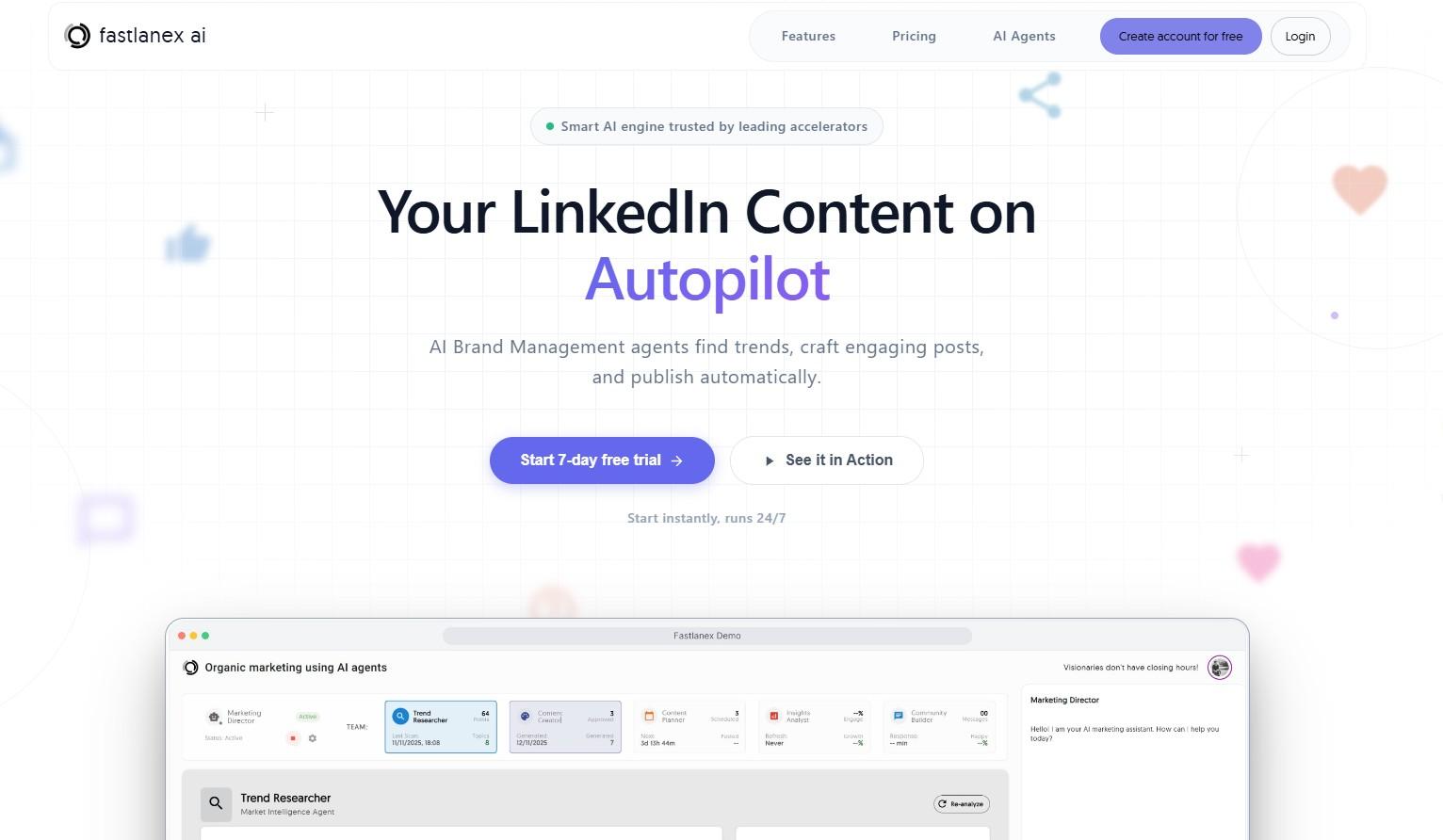
If you want LinkedIn growth, you don't need to post every day - you need to post consistently. Scheduling is the simplest way to turn “I'll post later” into a system. This guide shows a realistic cadence, content structure, and a clean automation workflow using fastlanex.ai.
Why scheduling wins on LinkedIn
- You publish consistently (even on busy days)
- You stop missing peak engagement windows
- You batch-create content once and ship all week
- You build momentum for your personal brand and offers
Your weekly batching session (60-90 minutes)
The simplest way to stay consistent is to batch once per week. This keeps quality high because you are thinking in systems, not scrambling daily.
- Collect raw inputs: notes, calls, wins, mistakes, customer questions
- Pick 3 post types: POV, framework, story
- Draft 5 posts in one sitting (rough drafts first)
- Do a fast edit pass for clarity and specificity
- Schedule and stop thinking about it until next week
Examples you can model
If you struggle to write, start by copying structure (not content). Use these as templates and swap in your niche and your proof.
- POV: "Daily posting is overrated. Weekly consistency wins." Then explain why.
- Framework: "My 3-step LinkedIn post checklist" with short bullets.
- Story: "The time I automated too much and engagement dropped" and what you changed.
- Tactical: "3 hooks you can steal" for your niche.
- Resource: a short list of tools you use with one line each.
A practical cadence (that doesn't burn you out)
For most founders and creators, a reliable target is 3 posts per week. That's enough frequency to stay top-of-mind, while giving you room to learn and improve.
If you're posting daily and your quality drops, engagement drops too. Instead, build a schedule that is sustainable.
Content pillars that make scheduling easy
Scheduling fails when you run out of ideas. The fix is to pick a few repeatable pillars and rotate them. If you can name your pillars, you can draft faster and stay consistent.
- Lessons learned: what you got wrong and what you changed
- Frameworks: a repeatable way to solve a problem
- Behind the scenes: your process, tools, and decisions
- Industry POV: an opinion about a trend with reasoning
- Case study: before/after, results, and the key lever
The weekly scheduling checklist
- Pick 1–2 content pillars (topics you can repeat weekly)
- Write in batches (3–5 posts at a time)
- Schedule with a human-safe cadence (avoid spammy bursts)
- Review performance weekly and double down on what works
How AI agents help (without making your content feel robotic)
The goal isn't “more automation.” It's less friction. fastlanex.ai helps you keep the human voice while letting agents handle the repetitive parts: ideation, drafting, repurposing, and scheduling.
- Create a content stream and define your audience + goals
- Let AI generate posts and matching visuals
- Approve drafts in one place
- Schedule and auto-post to LinkedIn consistently
Helpful resources
If you're planning your posting system, these references are useful:
FAQ
How many posts should I schedule per week?
Start with 3 posts per week for 3-4 weeks. If quality stays high and you can respond to comments, increase to 4-5. Avoid big spikes.
What should I measure when testing scheduling?
Track comments and saves (signal of real interest), plus profile views and inbound messages. Likes alone can be misleading.
What makes scheduled content feel robotic?
Generic hooks, no examples, and no point of view. Fix it by adding one concrete story, a specific claim, and a clear takeaway.
Final takeaway
Scheduling is a growth multiplier - but only if your content has a clear voice and a real point of view. Build a simple weekly system, and use fastlanex.ai to automate the heavy lifting while you stay focused on strategy and authenticity.