 Drop
DropFive people. Nothing else stays.
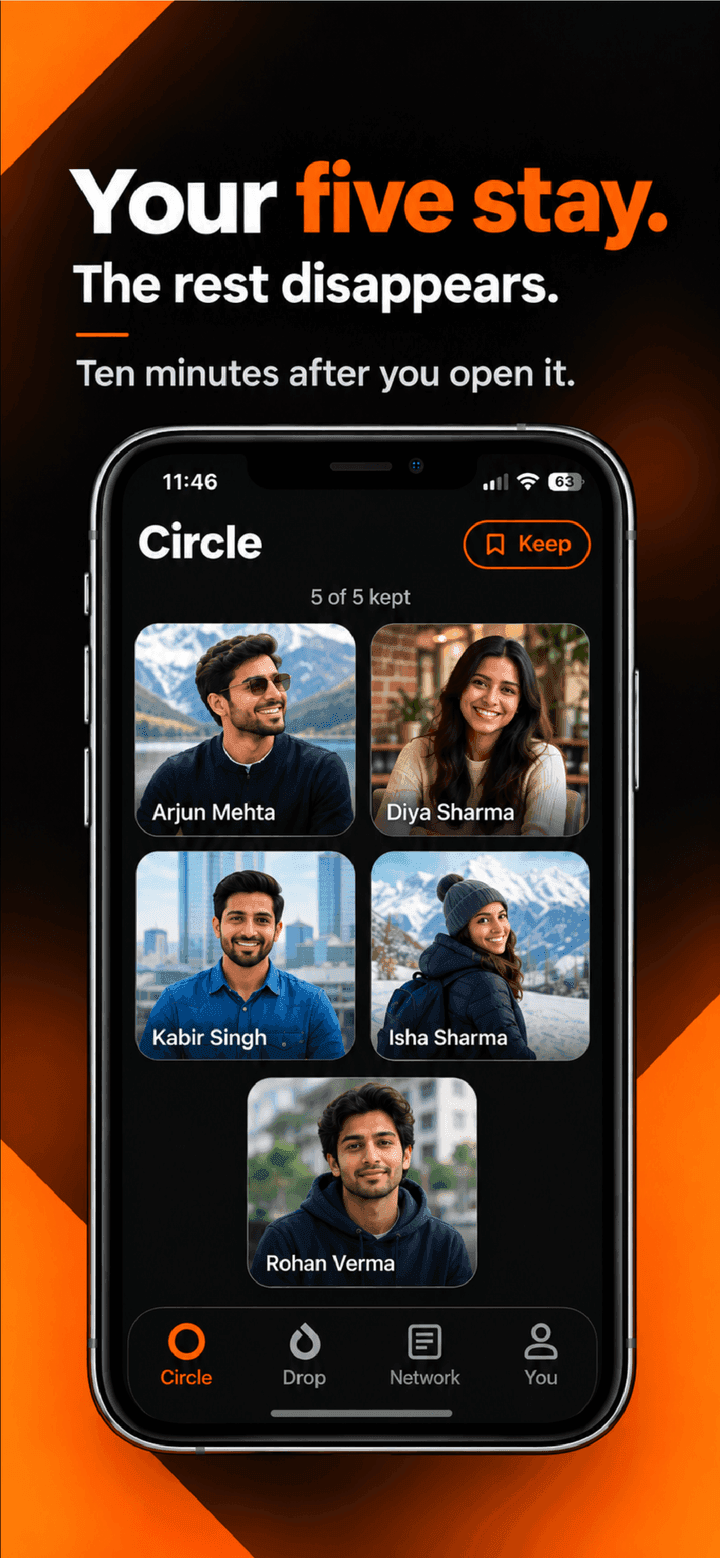
Drop is a messenger built on one idea: almost nothing should be kept. You keep five people. Your chats with them last. Everything else clears itself out ten minutes after you have seen it.
Drop works for phone numbers in India and Germany today.

The circle of five
You can keep up to five people. That is the whole circle. Keeping is mutual — you ask, they accept — so nobody can pin you to their screen without your say. Being in someone's five means something precisely because there are only five.
Your keeps are private. You see your own; nobody else sees a count, a ranking, or who else is in there.

Ten minutes, then gone
Anything that is not a chat with one of your five disappears ten minutes after you open it. No follower counts, no endless scroll, no profile for anyone to dig through. The home screen is mostly empty on purpose, and it stays that way.

Chats with your five last
Conversations with the people you have kept stay. Everything else clears itself out.

Worth knowing before you start. That history lives on your phone, not in an account you can restore. If you delete Drop or switch phones, it does not come back. Better said here than discovered later.
Offerings
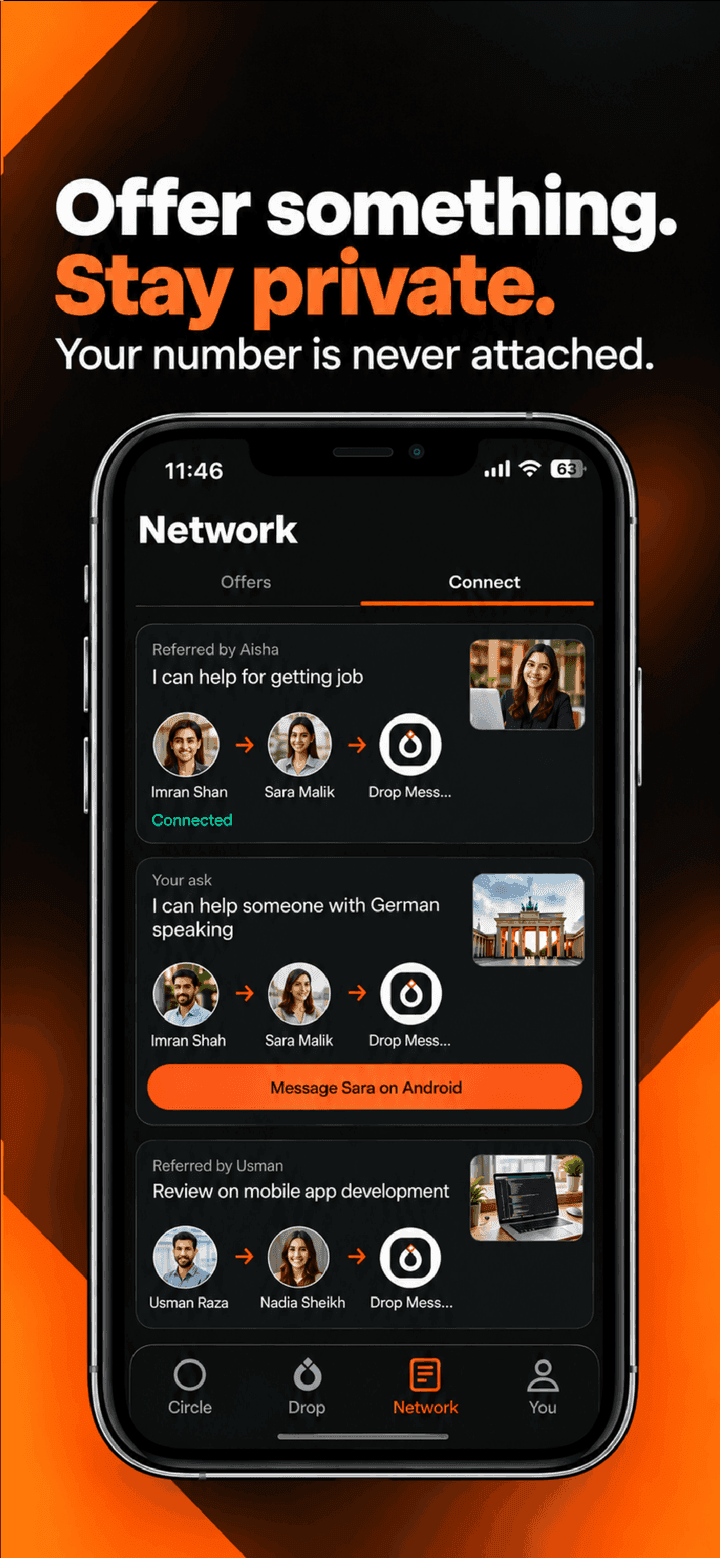
Put something you are lending, giving away or looking for in front of your circle. A quiet way to be useful to the people you actually know — and your phone number is never attached to one.
What Drop asks for, and why
- Your phone number, to make an account. It is never shown to somebody who has not kept you.
- Your contacts, only to check which of them are already on Drop. The check happens and the list is thrown away in the same breath — nothing is stored.
- Your photos, camera and microphone, only while you are attaching something.
All of it is set out in the privacy policy.
No ads. No trackers. No analytics.
There is no advertising SDK in the app, and no crash-reporting or analytics SDK either. Not throttled, not anonymised — not there. Nothing about you is sold or shared with anyone for their own purposes.